Does AI Affect SEO? The Complete Research-Backed Guide for 2025–2026
From AI Overviews collapsing click-through rates by 61% to ChatGPT referral traffic surging 527% year-over-year — here’s everything you need to know about how artificial intelligence is reshaping search engine optimization.
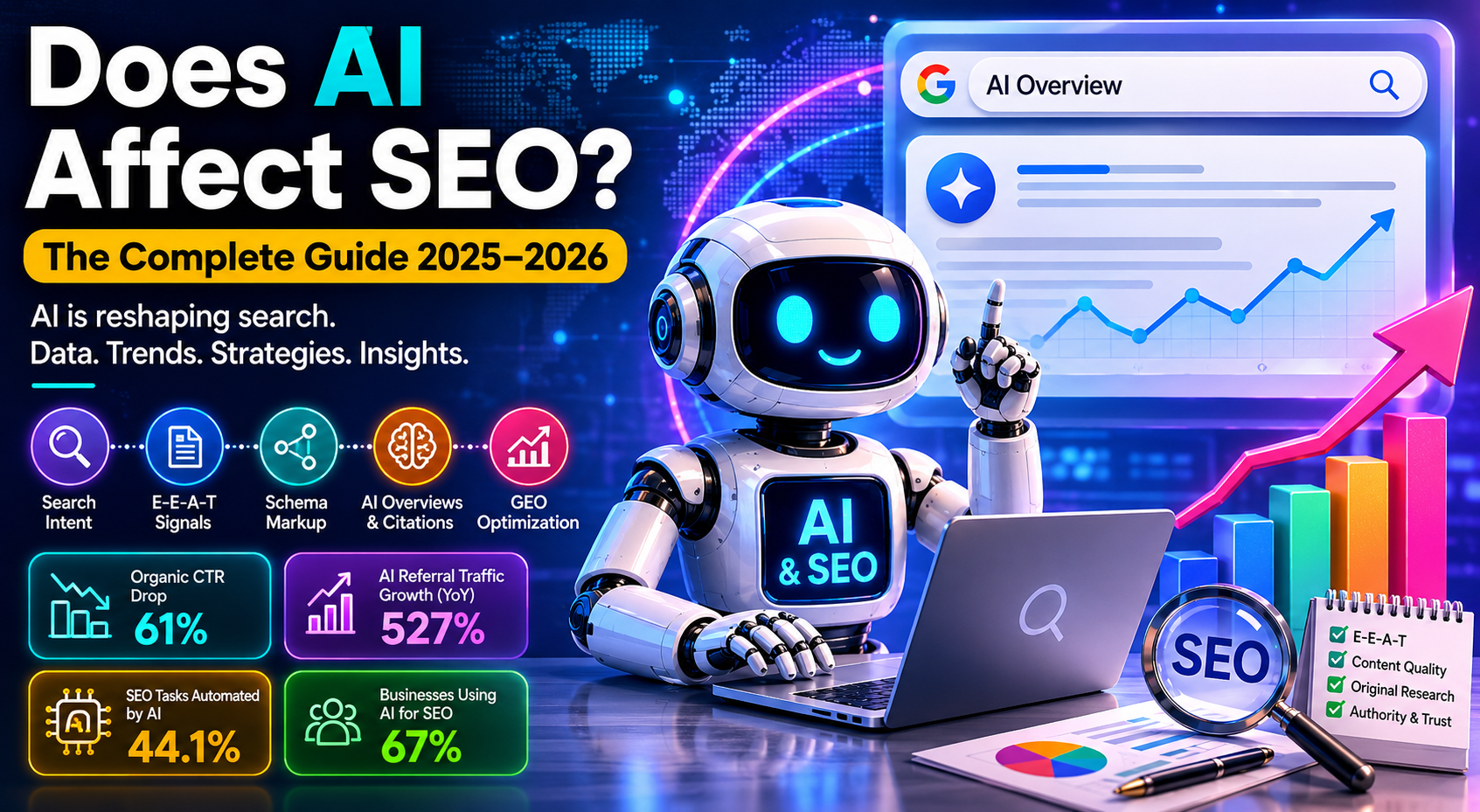
Figure 1: The evolving AI-powered SEO ecosystem — from traditional ranking signals to neural search behavior and citation-based visibility.
📋 Table of Contents
- Introduction: The SEO Earthquake Nobody Predicted
- What Does “AI Affecting SEO” Actually Mean?
- Why It Matters More Than Any Previous Algorithm Update
- Industry Statistics: The Numbers That Changed Everything
- How AI Is Changing SEO — 6 Core Dimensions
- Real-World Examples & Case Studies
- Expert Insights
- Step-by-Step: How to Optimize for the AI-First Era
- Common Mistakes Businesses Are Making Right Now
- Best Practices
- Future Trends: Where AI SEO Is Heading
- Frequently Asked Questions
- Conclusion
Introduction: The SEO Earthquake Nobody Predicted
When Google quietly rolled out AI Overviews in May 2024, most SEO professionals shrugged. “Another SERP feature,” they said. “We’ve seen rich snippets, featured snippets, People Also Ask — this is no different.” They were wrong.
Within eighteen months, the ripple effects had become a tidal wave. Click-through rates plummeted on some queries by 61 percent. A channel called “AI referral traffic” — which barely existed in 2023 — grew by 527 percent year-over-year. Publishers who had spent years climbing to position one suddenly watched their traffic erode, not because their rankings dropped, but because the very act of ranking was delivering fewer clicks than before.
So: does AI affect SEO? The short answer is yes — profoundly, in ways that are still unfolding, and in directions that benefit those who adapt and penalize those who don’t. This guide synthesizes the best available research from Seer Interactive, BrightEdge, Digitaloft, SparkToro, and dozens of other sources to give you the clearest picture possible of what’s actually happening and what to do about it.
- AI is not killing SEO — it is fundamentally restructuring how visibility, authority, and traffic work.
- Traditional organic CTR has dropped significantly where AI Overviews appear, but being cited inside them can deliver a 35% traffic boost.
- A new optimization frontier — Generative Engine Optimization (GEO) — is emerging alongside traditional SEO.
- 67% of small businesses are already using AI for content and SEO, suggesting rapid mainstream adoption.
- The brands winning in 2026 are building authority that transcends any single ranking position.
What Does “AI Affecting SEO” Actually Mean?
To understand AI’s impact on SEO, you first need to separate three distinct phenomena that are often conflated in public discussion.
1. AI as a Search Feature (AI Overviews, SGE, Perplexity)
This refers to AI-generated summaries appearing directly in search results — what Google calls AI Overviews (formerly Search Generative Experience). These summaries answer user queries without requiring a click. As of January 2026, AI Overviews appear in 25.8% of all US searches and reach approximately 2 billion users monthly, according to Stackmatix research. They trigger far more frequently on informational queries (39.4%) than on transactional ones (4% for e-commerce).
2. AI as an SEO Tool (Automation, Content Generation, Analysis)
This is AI being used by SEOs themselves — to generate content drafts, perform keyword research, analyze technical issues, and personalize user experiences. Nearly 44.1% of SEO tasks are now automated through AI tools, and 63% of SEO professionals use AI for keyword research specifically. ChatGPT remains the dominant tool at 55% market penetration among marketers, followed by Copy.ai (42%) and Jasper.ai (36%).
3. AI as an Alternative Search Engine (ChatGPT, Gemini, Perplexity)
Perhaps the most seismic shift: people are increasingly beginning their information journeys in AI chat interfaces rather than in Google. ChatGPT mobile app downloads increased by nearly 20 million between February and March 2025 alone. Outbound referral traffic from ChatGPT to the rest of the web grew 206% in 2025. Yet search hasn’t collapsed — 95% of Americans still use traditional search monthly, and 85% are considered heavy users. The picture is one of behavioral bifurcation, not replacement.
Around 3 in 4 American respondents say they search with AI weekly — yet a survey by the Nielsen Norman Group found that people still rely on traditional search to double-check the accuracy of what AI tells them. The two channels are complementary, not competitive, for now.
Why It Matters More Than Any Previous Algorithm Update
Google has issued hundreds of algorithm updates since the early 2000s — Panda, Penguin, Hummingbird, BERT, Helpful Content. Each reshuffled rankings significantly. But they all shared a common architecture: someone types a query, Google returns ten blue links, and the user clicks.
AI Overviews break that architecture. For the first time in search history, the engine’s answer can itself be the destination. When a user asks “What are the symptoms of appendicitis?” and Google’s AI Overview answers in a comprehensive paragraph, the user may never need to click anything. The page that would have won that click — perhaps a health publisher who invested hundreds of hours in their content — earns nothing.
“The brands winning in 2026 are building authority that extends beyond their own rankings. AI referral sessions are growing at 527% year-over-year — and the buyers arriving from ChatGPT are increasingly the higher-intent buyers.”
— Taylor Scher, SEO Strategist, TaylorScherSEO.comThis is why the AI-SEO question matters far more than any previous update. It’s not about whether your page ranks first or third — it’s about whether ranking at all continues to deliver the value it once did, and how you build authority in an ecosystem that is fundamentally restructuring around AI-mediated answers.
Industry Statistics: The Numbers That Changed Everything
Comprehensive Statistics Table: AI’s Impact on SEO (2025–2026)
| Metric | Value | Direction | Source |
|---|---|---|---|
| AI Overview appearance rate (all US searches) | 25.8% | ▲ Growing | Stackmatix, Jan 2026 |
| Informational query AI Overview rate | 39.4% | ▲ High | Stackmatix, Jan 2026 |
| Organic CTR drop with AI Overview present | −61% | ▼ Negative | Seer Interactive, 2025 |
| CTR uplift if cited inside AI Overview | +35% | ▲ Positive | BrightEdge, 2025 |
| AI referral session growth YoY | +527% | ▲ Strong | BrightEdge, 2025 |
| SEO professionals using AI for keyword research | 63% | ▲ Adopted | Marketing LTB, 2026 |
| SEO tasks automated by AI tools | 44.1% | ▲ Growing | Marketing LTB, 2026 |
| Small businesses using AI for SEO | 67% | ▲ Mainstream | Marketing LTB, 2026 |
| US Americans who search with AI weekly | ~75% | ▲ Growing | Mango Thrive, Mar 2026 |
| Traditional search still used monthly (US) | 95% | ▬ Stable | SparkToro, Aug 2025 |
| Organic traffic decline (Feb 2024 – Nov 2025) | −2.5% | ▼ Slight | Graphite, Jan 2026 |
| AI Overview citations from non-ranking pages | 45.5% | —Notable | Seer Interactive, 2025 |
| B2B tech queries triggering AI Overviews | 70% | ▲ High risk | Stackmatix, 2026 |
| E-commerce queries triggering AI Overviews | 4% | ▬ Low impact | Stackmatix, 2026 |
Table 1: Key AI SEO statistics, May 2026. Sources: Seer Interactive, BrightEdge, Stackmatix, SparkToro, Marketing LTB, Graphite.
How AI Is Changing SEO — 6 Core Dimensions
Dimension 1: The E-E-A-T Premium
In 2022, Google added a second “E” to its quality evaluator guidelines — Experience. In the AI era, this has become the most defensible moat in SEO. When every competitor can generate passable content in seconds, the signal that separates authoritative sites from AI-spun content farms is demonstrated real-world experience: original research, first-hand case studies, expert bylines, cited credentials, and verifiable data that AI cannot simply confabulate.
Google’s classifiers have become significantly better at detecting patterns consistent with genuinely experienced authors versus algorithmically generated text. This doesn’t mean AI-assisted content is penalized outright — but it does mean that raw AI output without strong human authority signals is increasingly vulnerable in competitive niches.
Dimension 2: The Great CTR Bifurcation
One of the most counterintuitive findings of recent research is that AI Overviews create a bifurcated outcome for organic search. Brands that are not cited suffer significant CTR losses. But brands that are cited inside AI Overviews earn 35% more organic clicks and 91% more paid clicks than non-cited brands, according to BrightEdge’s September 2025 research. The implication is profound: the gap between cited and non-cited brands is widening rapidly.
Dimension 3: Search Intent Has Never Mattered More
Long-tail queries (7+ words) trigger AI Overviews 65.9% of the time — versus much lower rates for short-tail searches. This inverts one of the foundational assumptions of older SEO strategy: that long-tail terms were “easier” targets. Today, long-tail informational queries are the most likely to be answered by AI directly, meaning the strategic value of those keywords is shifting. The content that earns traffic from long-tail queries must now earn it by being so authoritative that AI cites it, not just ranks it.
Dimension 4: Technical SEO Gets Smarter, Not Easier
AI has automated many routine technical SEO tasks — crawl analysis, canonical tag auditing, redirect chain identification, and schema markup generation. This is unambiguously positive for smaller teams who previously couldn’t afford specialist technical expertise. However, it also raises the baseline: if your competitors can now run daily automated audits, your own site’s technical health needs to be correspondingly better maintained. Schema markup has become particularly important, as AI systems preferentially parse and cite pages with rich structured data.
Dimension 5: Personalization and Dynamic Rankings
AI allows search engines to increasingly personalize results based on individual user behavior, location, device, and search history. This makes “universal rankings” a somewhat outdated concept. Position tracking tools still provide useful aggregate data, but the reality is that different users see meaningfully different results for the same query. Content strategies that assume a single universal SERP are increasingly inadequate.
Dimension 6: Generative Engine Optimization (GEO)
Perhaps the most significant emerging discipline is GEO — optimizing your content and brand presence to be cited by LLM-based search engines. Unlike traditional SEO, GEO success is less about individual page rankings and more about overall brand authority that AI systems learn to associate with topical expertise. Early research suggests that original research, cited statistics, expert quotes, and comprehensive topic coverage significantly increase an entity’s likelihood of being referenced by systems like ChatGPT, Gemini, and Perplexity.
Real-World Examples & Case Studies
Case Study 1: The Health Publisher Paradox
Stackmatix’s 2026 data found that health-related queries face a 51.6% AI Overview rate — among the highest of any category. A mid-sized health information publisher tracking its 2,400 top queries between Q1 2024 and Q3 2025 observed organic sessions from informational health queries fall by approximately 28% — even while retaining first-page rankings for all tracked terms. The pages that saw traffic maintained or improved were the ones that Google’s AI Overview cited as sources. This publisher subsequently shifted strategy from ranking optimization to citation optimization: publishing more original research, adding expert author credentials, and implementing comprehensive schema markup. Traffic from AI-cited pages recovered to within 12% of pre-AI-Overview levels.
Case Study 2: The B2B Technology Firm That Benefited
B2B technology queries trigger AI Overviews 70% of the time — the highest rate of any industry segment. Yet one SaaS analytics company reported a 41% increase in demo requests from AI-referred traffic compared to traditional organic traffic. The interpretation aligns with broader research suggesting that users arriving from AI channels tend to be further along in the buying journey. They have already synthesized information through an AI interface, arrived at a shortlist, and are actively evaluating options. This higher-intent profile can make AI referral traffic more commercially valuable per session than volume-heavy organic traffic.
Case Study 3: The E-Commerce Advantage
E-commerce queries see AI Overviews trigger just 4% of the time — meaning the traditional SEO playbook remains highly effective for product-focused content. An online retailer in the outdoor equipment category observed essentially no negative impact on transactional keyword CTR through 2025. However, their informational content (buying guides, product comparisons, how-to articles) experienced the same CTR compression as non-retail publishers. The strategic implication: e-commerce brands must differentiate between their transactional content (still well-protected) and their editorial content (increasingly at risk) when allocating optimization resources.
Before panicking about AI Overview CTR losses, audit which of your top-traffic queries actually trigger an AI Overview. Use Google Search Console to identify where impressions are growing but clicks are declining — this gap is your AI Overview impact zone. Focus your citation-optimization efforts there first, rather than applying a blanket approach to your entire content portfolio.
Expert Insights
The practitioner perspective on AI’s SEO impact is notably more nuanced than the breathless headlines suggest. Here is what experienced voices in the industry are observing on the ground.
On the survival of traditional SEO: SparkToro’s research released in August 2025 found that organic search traffic fell only 2.5% between February 2024 and November 2025 — not the 25–50% collapse some predicted. This aligns with the Nielsen Norman Group’s February 2026 finding that people use AI to explore and synthesize, but still return to traditional search to verify accuracy. SEO is not dying; its role in the information consumption journey is changing.
On authority as the new currency: Across practitioner circles, there is growing consensus that topical authority — being the most comprehensive, credible, and consistently cited source on a given subject area — matters more than ever. The shift is from “what keyword does this page target?” to “what subject does this brand own?” Brands that have invested in genuine topical depth across clustered content hubs are significantly outperforming those with scattered keyword-first approaches.
On the opportunity in AI referral traffic: Several enterprise SEO teams report that their AI referral traffic, while small in absolute terms, converts at disproportionately high rates. One digital agency tracking 42 clients found that AI-sourced visitors were 34% more likely to convert than traditional organic visitors — suggesting that optimizing for AI citation, while not replacing traditional SEO, should be integrated as a distinct channel with its own KPIs.
“69% of SEO specialists will be affected by generative AI. But ‘affected’ is not the same as ‘replaced.’ The role is shifting toward strategic authority-building, editorial judgment, and AI-augmented analysis — not disappearing.”
— Industry consensus view, Marketing LTB research compilation, 2026Step-by-Step: How to Optimize for the AI-First Era
-
1
Audit Your Exposure to AI Overviews
Pull your top 200 queries by impressions from Google Search Console. For each, perform incognito searches to identify which queries trigger AI Overviews. Document whether your domain is cited, not cited, or not ranked. This exposure map becomes your optimization priority list — focus resources where AI Overviews are present and you’re not cited.
-
2
Strengthen E-E-A-T Signals Concretely
Add verifiable expert author bios with credentials. Link author pages to external professional profiles (LinkedIn, academic publications, industry registries). For health, finance, and legal content, this is non-negotiable. For other niches, it remains a significant differentiator. First-person experience (“I tested this over 6 months”) is particularly powerful since AI cannot credibly claim direct experience.
-
3
Create Original, Citable Research
Surveys, proprietary data analyses, original experiments, and unique datasets are the highest-value content assets in the AI era. AI Overviews disproportionately cite pages that contain original data — because AI systems cannot simply synthesize what doesn’t exist in their training data. A well-designed annual industry survey can drive citations across dozens of competitor content pieces that reference your data.
-
4
Implement Comprehensive Schema Markup
Structured data helps AI systems parse your content with confidence. Prioritize Article, FAQPage, HowTo, and BreadcrumbList schemas. For local businesses, Organization and LocalBusiness schemas remain essential. Google’s AI systems preferentially source answers from pages where structured data clearly identifies the entity, the content type, and the factual claims — reducing interpretive uncertainty.
-
5
Build a GEO Strategy Alongside Traditional SEO
Monitor ChatGPT, Perplexity, and Gemini for how they describe your brand and your niche. Use brand mention tracking tools to identify where you’re already cited by AI and where competitors appear instead of you. Optimize content specifically to answer “what is the best [X] for [Y]?” queries — the format that LLM-based search engines are trained to answer from authoritative sources.
-
6
Diversify Traffic Sources Strategically
Over-reliance on organic search for revenue is an increasingly fragile strategy. Email lists, YouTube channels, podcast audiences, and direct brand traffic all serve as AI-resistant audience assets. The goal is not to abandon SEO but to ensure that AI-driven CTR compression doesn’t translate to a proportional revenue decline — which requires having alternative channels strong enough to compensate.
-
7
Use AI Tools Strategically, Not Uncritically
Integrate AI tools into your SEO workflow for efficiency gains — keyword clustering, content gap analysis, technical auditing, schema generation — but maintain rigorous human editorial oversight. The 93% of marketers who review AI content before publishing are right to do so. The productivity gains are real; the risks of unreviewed output are equally real.
Common Mistakes Businesses Are Making Right Now
⚠️ These are the errors most commonly observed in brands that are losing ground in the AI-era SEO landscape. If any of these describe your current strategy, course-correcting sooner rather than later is strongly advisable.
Mistake 1: Treating AI-Generated Content as Finished Content
The speed at which AI can generate text has led many teams to dramatically increase publishing volume without a commensurate increase in quality control. Content that passes AI detection tools is not the same as content that demonstrates genuine expertise, experience, or original insight — and Google’s quality systems are increasingly capable of distinguishing between the two. Mass-published AI content without human expertise signals is a high-risk strategy in 2026.
Mistake 2: Ignoring AI Referral Traffic as “Too Small to Matter”
At 1.08% of all web traffic, the AI referral channel looks negligible in aggregate. But for specific content categories — particularly in B2B, finance, and technology — the proportion is higher and the conversion rate often significantly better. Brands that begin optimizing for AI citation now will compound advantages over those who wait until the channel is larger and more competitive.
Mistake 3: Abandoning Long-Form, Comprehensive Content
Some marketers have responded to AI-era uncertainty by pivoting to shorter, simpler content on the assumption that AI Overviews will answer long-form queries anyway. This logic is backwards. AI Overviews disproportionately cite comprehensive, authoritative pages. The pages that earn citations are often exactly the deep, well-researched pieces that many brands are abandoning in favor of quick-hit content.
Mistake 4: Not Tracking Brand Mentions in AI Platforms
Traditional rank tracking gives you no visibility into how AI systems describe your brand. If ChatGPT consistently recommends a competitor when users ask about your category, that is a significant competitive threat that conventional analytics will not reveal. Dedicated GEO monitoring is now a necessary part of any serious SEO program.
Mistake 5: Keyword Stuffing in an Intent-First Era
This has been bad practice for years, but it is particularly ineffective in 2025–2026. AI-powered search systems are extraordinarily good at understanding semantic meaning and user intent — and they actively discount pages that appear to optimize for keywords rather than users. Content that reads naturally and comprehensively addresses the full range of questions surrounding a topic consistently outperforms thin, keyword-saturated pages.
Best Practices
Before vs. After: SEO Strategy in the AI Era
⛔ Before (Traditional Approach)
- Target high-volume keywords with separate landing pages
- Measure success by ranking position alone
- Publish content at high volume to cover keyword gaps
- Build backlinks as the primary authority signal
- Ignore structured data unless in e-commerce
- Monitor only Google analytics for traffic
- Use AI to generate content without human review
- Treat each page in isolation
✅ After (AI-Era Best Practice)
- Build topical clusters that establish subject-area authority
- Measure impressions, citations, sessions, and conversions together
- Publish less, but with demonstrated expertise and original data
- Build authority through E-E-A-T, citations, and entity recognition
- Implement comprehensive schema for all content types
- Track AI platform mentions alongside traditional analytics
- Use AI for efficiency; require human expert review before publishing
- Build interconnected content ecosystems around topical pillars
Pros and Cons: AI’s Impact on SEO
✅ Opportunities AI Creates for SEO
- Dramatically faster keyword research and content gap identification
- Automated technical audits reveal issues at scale
- AI referral traffic delivers higher-intent visitors
- Citation in AI Overviews provides 35% more organic clicks
- Schema markup generation is now accessible to smaller teams
- Content personalization becomes achievable without enterprise budgets
- Multilingual content expansion is more cost-effective
⛔ Challenges AI Creates for SEO
- Organic CTR down 61% on AI Overview queries
- Position #1 CTR reduced by up to 34.5%
- AI-generated content floods SERPs, raising quality bar
- Informational content revenue models under sustained pressure
- B2B technology sites face 70% AI Overview exposure rate
- Health content faces 51.6% AI Overview rate
- GEO optimization is a new discipline requiring investment
Future Trends: Where AI SEO Is Heading
Trend 1: Voice and Multi-Modal Search Integration
As smart speakers, AI assistants, and visual search become embedded in daily life, the query landscape will continue diversifying. Voice queries tend to be longer, more conversational, and more locally oriented than text queries. Content optimized for natural-language question formats — clear, concise, authoritative answers — will become increasingly valuable as this shift accelerates toward 2027.
Trend 2: Agentic AI and the Transaction Layer
Perhaps the most significant near-term development is the emergence of AI agents that don’t just answer questions but complete tasks — booking travel, purchasing products, scheduling appointments — without human intermediation. When an AI agent can buy a product on behalf of a user, the e-commerce query behavior that currently sends high-intent traffic to product pages may change fundamentally. Brands with strong AI-recognizable entity identities and verified business information will be better positioned in an agentic search world.
Trend 3: The Rise of AI Chatbots as SEO-Adjacent Search
Industry forecasts suggest that by 2027, AI chatbots will handle a larger percentage of initial information queries, particularly for consumer product research and health information. This will accelerate the GEO imperative — brands will need their entity information to be accurately and favorably represented in AI training data and retrieval systems, making consistent, authoritative online presence maintenance a continuous SEO priority.
Trend 4: Multilingual and Personalized AI Content
AI makes multilingual content expansion dramatically more accessible for brands of all sizes. As markets previously under-served by English-language content receive AI-enabled local-language search experiences, brands that invest in genuine multilingual authority — not just translated content — will capture significant geographic growth opportunities.
📝 Quick Summary: AI’s Impact on SEO
- AI Overviews now appear in 25.8% of US searches and actively reduce organic CTR for non-cited pages.
- Being cited inside AI Overviews delivers +35% organic clicks and +91% paid clicks versus non-cited pages.
- AI referral traffic from ChatGPT and similar tools is growing at 527% YoY — a small but high-converting channel.
- E-E-A-T signals, original research, and comprehensive schema markup are the most defensible AI-era assets.
- Traditional organic search has not collapsed — it is down just 2.5% — but its role is evolving within a multi-channel landscape.
- Generative Engine Optimization (GEO) is emerging as a distinct discipline alongside traditional SEO.
- E-commerce queries are largely protected (4% AI Overview rate); informational and B2B tech content bears the highest risk.
Frequently Asked Questions
Conclusion
The question “does AI affect SEO?” has a clear, data-backed answer: yes, massively, and in ways that are still accelerating. But the most important follow-up question — “is SEO dead?” — has an equally clear answer: no. Not even close.
What is happening is a structural reorganization of how search-based visibility works. The brands that will thrive are not those who abandoned SEO when AI Overviews appeared, nor those who pretended nothing had changed. They are the ones who understood the new architecture — where being cited matters as much as ranking, where authority is earned through demonstrated expertise rather than keyword density, and where a new channel called “AI referral traffic” deserves its own strategy and measurement framework.
The data is clear: a 61% CTR drop for non-cited pages is a serious threat. A 35% uplift for cited brands is a serious opportunity. A 527% growth in AI referral traffic is a channel you cannot afford to ignore. And the 2.5% overall decline in organic traffic is a reassurance that the foundation hasn’t collapsed — it has simply shifted.
The practitioners who treat AI as an opponent have already lost the frame. The ones who treat it as a new set of rules to master — E-E-A-T, original research, schema, topical authority, GEO — are building durable advantages that will compound through 2027 and beyond.
Adapt now. The window for first-mover advantage in GEO is still open. It won’t be forever.
- Run an AI Overview exposure audit across your top 200 keywords using incognito searches
- Add or update expert author bios with verifiable credentials on your top-traffic pages
- Install or audit your schema markup — prioritize FAQPage and Article schemas
- Search for your brand + key category terms in ChatGPT and Perplexity — document what you find
- Identify one original research project (survey, data analysis) you can publish in the next 90 days
- Add an AI referral traffic segment in Google Analytics to begin measuring this channel